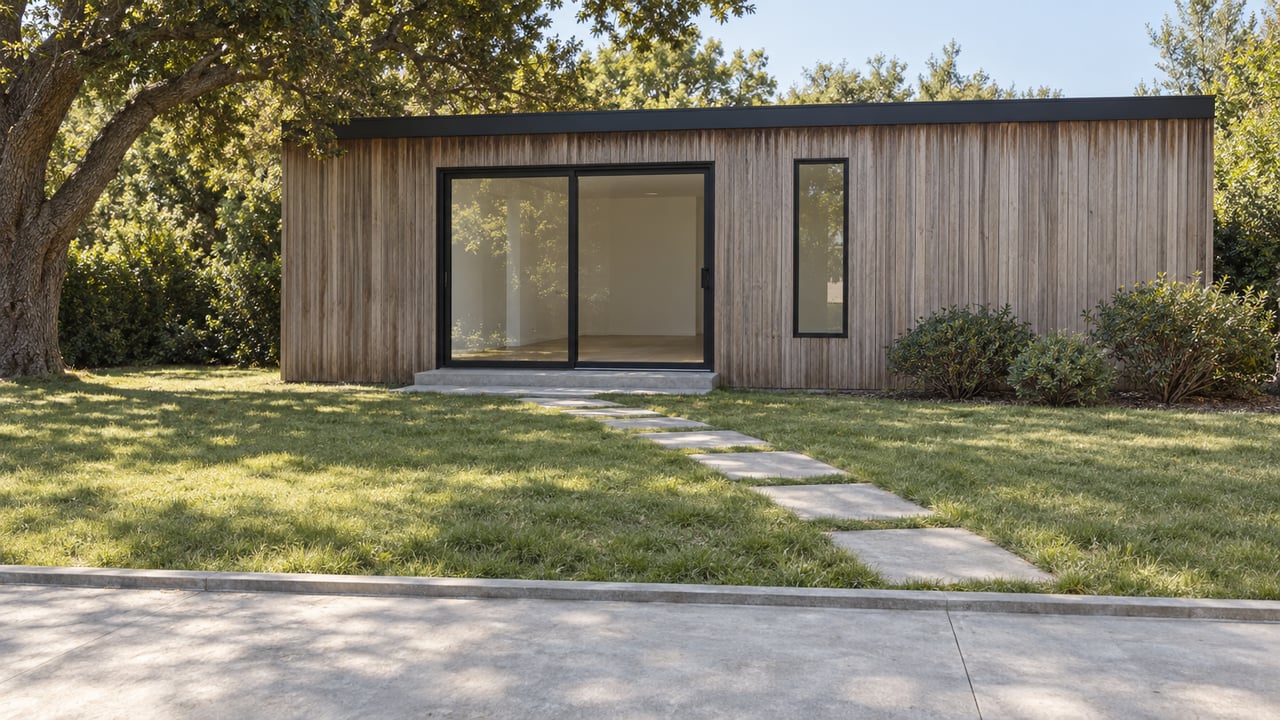
Alamo's ADU Rules Got Easier in 2025. The Approval Was Never Local.
October 1, 2026
October 1, 2026
A homeowner off Danville Boulevard drove to the Alamo Women's Club on a Tuesday evening in early 2026, agenda in hand, ready to raise concerns about a neighbor's accessory dwelling unit at the Alamo Municipal Advisory Council meeting. She sat through the parks update and the roundabout progress report before learning what a lot of longtime residents eventually discover: according to Burton Builders, the MAC can advise the Board of Supervisors on Alamo issues, but it has no authority to approve, deny, or modify a single ADU permit. That decision, for every property in town, runs through Contra Costa County's Department of Conservation and Development in Martinez.
Alamo has no city hall because Alamo is not a city. It is unincorporated Contra Costa County, which means the zoning code, the permit counter, and the final sign-off all sit outside the community itself, at 30 Muir Road, or through the county's ePermits portal. The MAC, formed in 2009 to advise on everything from parks to land use, meets the first Tuesday of each month at the Alamo Women's Club on Danville Boulevard. It is a real and useful body for shaping county policy over time. It is not where an ADU application lives or dies.
That distinction matters more than usual right now, because the underlying rules just changed in a way that makes a lot of Alamo homeowners newly eligible for a project many assumed was out of reach.
Contra Costa County rewrote its ADU ordinance in May 2025 under County Code Chapter 82-24, adopted as Ordinance 2025-07. The rewrite aligned the county with the current run of state ADU law, and it did something specific for Alamo: it lowered the large-lot threshold to 12,000 square feet. Alamo's R-20 zoning requires a minimum lot size of 20,000 square feet. That means nearly every conventionally zoned parcel in town clears the county's large-lot bar with room to spare, unlocking the full detached ADU allowance rather than the smaller state-minimum fallback.
Here is what that allowance looks like on the ground in Alamo today.
| Factor | Current standard |
|---|---|
| County's large-lot ADU threshold | 12,000 sq ft (Alamo's R-20 minimum is 20,000 sq ft) |
| Maximum detached ADU size | 1,200 sq ft |
| Attached garage | 600 to 800 sq ft, does not count toward the ADU size cap |
| State-exempt unit, by right | 800 sq ft, with 4-foot side and rear setbacks |
| Architectural match to main house | No longer required |
| Review process | Ministerial, no design hearing, 60-day state decision clock |
The dropped design-match requirement is worth sitting with for a moment. Alamo has spent decades building a certain visual consistency into its larger-lot neighborhoods, and a rule that used to require a new structure to echo the main house's rooflines and materials is simply gone from the county's current standard. A homeowner can now design a detached unit on its own terms, subject to setbacks and size, without an architectural review board weighing in on whether it matches.
None of that zoning relief touches the five things that actually determine whether a specific Alamo lot can support an ADU, and how much it will cost to get there.
The first is whether the parcel is on public sewer or a private septic system. Contra Costa Health's Land Use Program reviews and approves septic system plans before a building permit can move forward, and a lot on septic needs that Environmental Health sign-off worked into the design from the start rather than discovered midway through drawings. This has nothing to do with the 2025 ordinance and everything to do with which utility line runs to the parcel.
The second and third are creek setbacks and protected oak trees. Alamo's terrain includes enough natural drainage and mature oak canopy that a site plan has to map both before permit review begins, and the county verifies creek-bank setbacks at the building permit stage rather than earlier, which can reshape a design that looked fine on paper.
The fourth is slope. Grades over 5 percent can trigger a geotechnical report, adding both cost and time to a project on Alamo's hillier lots, particularly toward the town's edges near Las Trampas.
Then there is the utility connection itself. EBMUD charges a system capacity fee of roughly $19,500 for a new water meter, and an ADU routed through a separate meter takes that charge on directly. A unit designed to run through the main house's existing meter avoids it entirely. That single design decision, made early, is worth more to a project's bottom line than almost anything in the zoning code.
Alamo has more HOA-governed streets than most of Lamorinda, and questions about neighborhood covenants come up in nearly every ADU conversation here. State law settled this one. According to ADU Pass, California voids CC&R provisions that would prohibit or unreasonably restrict an ADU, and it bars HOAs from attaching special fees to one. It cannot hold a veto over whether the ADU gets built at all.
The zoning code got out of the way in Alamo this year. That is real, and it opens the door for a lot of lots. But the door opening is not the same as the path being clear. The questions that actually determine cost, timeline, and feasibility are about the specific parcel: septic or sewer, where the creek and the oaks sit, what the slope does, which meter the new unit will run through, and whether an HOA letter needs a polite but firm reminder of what state law already settled. Those are land questions and utility questions, not zoning questions, and they are worth answering before a single drawing gets made.
Does the Alamo Municipal Advisory Council need to approve my ADU plans? No. The MAC advises the Board of Supervisors on county policy and community concerns. Permit authority for every Alamo ADU sits with Contra Costa County's Department of Conservation and Development.
Do I still need my ADU to match my house architecturally? No. The county's 2025 ordinance dropped that requirement, so a detached unit can be designed on its own terms within the applicable size and setback rules.
Can my HOA stop me from building an ADU? No. State law voids CC&R provisions that would prohibit or unreasonably restrict an ADU and prevents HOAs from charging ADU-specific fees
Whether the goal is a rental unit, space for aging parents, or a value-add ahead of a future sale, the ADU conversation in Alamo now starts with the parcel itself rather than the code. If you're weighing what a lot can realistically support, or how an ADU might fit into a broader plan to sell or hold, Ria Rossi is glad to walk through it with you. Schedule a white glove home strategy consultation to talk through your specific address.
This article is general information, not legal, tax or financial advice. Consult a qualified professional about your situation.
Stay up to date on the latest real estate trends.

The trails, tables, and clubs that shape everyday life here, and what they tell you about whether Alamo fits the life you want.

From San Francisco to Silicon Valley, here's what to know about commuting, transportation options, and everyday life in Alamo.
A thoughtful buyer's guide to wildfire insurance, hillside risks, and the details worth understanding before making an offer.
A buyer’s guide to the Alamo neighborhoods and property settings where more land, meaningful privacy, and beautiful views can still be part of everyday life.
Why preparation, positioning, and buyer perception can matter as much as square footage.
Connect with Ria Rossi for trusted, tailored guidance in the East Bay luxury market. Your next chapter begins here.