Lafayette vs. Alamo: Which Is Better For Upsizing Families?
April 2, 2026
April 2, 2026
If you are moving up for more space, the Lafayette vs. Alamo decision can feel surprisingly close. Both markets attract families who want room to grow, access to parks and trails, and a strong long-term lifestyle fit, but they live a little differently day to day. This guide will help you compare price, home types, commute patterns, amenities, and overall feel so you can choose the East Bay location that fits your next chapter. Let’s dive in.
For most upsizing families, this is not a simple price comparison. As of February 2026, Lafayette’s median sale price was about $2.06 million, while Alamo’s was about $2.3 million, according to Redfin market data for Lafayette and Redfin market data for Alamo.
That means Alamo is not the budget alternative many buyers assume it is. In practice, the choice usually comes down to lifestyle, commute needs, lot size, and housing style rather than trying to find a meaningfully cheaper market.
Lafayette tends to appeal to families who want a little more flexibility in how they live. You get a more defined downtown, direct BART access, and a broader mix of housing options than you typically see in Alamo.
That combination can matter when your family needs more space but still wants convenience. If you are balancing school drop-offs, commuting, after-school activities, and weekend errands, Lafayette often feels easier to navigate as an all-around lifestyle choice.
One of Lafayette’s biggest advantages is direct transit access. Lafayette Station sits on BART’s Antioch-to-SFIA/Millbrae line, giving you a direct rail option for San Francisco, Oakland, and other Bay Area destinations.
For many households, that changes the daily rhythm in a meaningful way. If one adult expects to commute by train with any regularity, Lafayette often has the edge because transit is built into the town rather than treated as a backup plan.
Lafayette’s amenity base is more compact and city-centered. The city highlights parks, trails, recreation spaces, and community amenities, including six parks, seven neighborhood trails, a community center, and more than 16 miles of hiking trails.
You also have gathering places like Lafayette Plaza and the Lafayette Library & Learning Center woven into the town fabric. For many families, that creates a stronger sense of having everyday destinations close at hand.
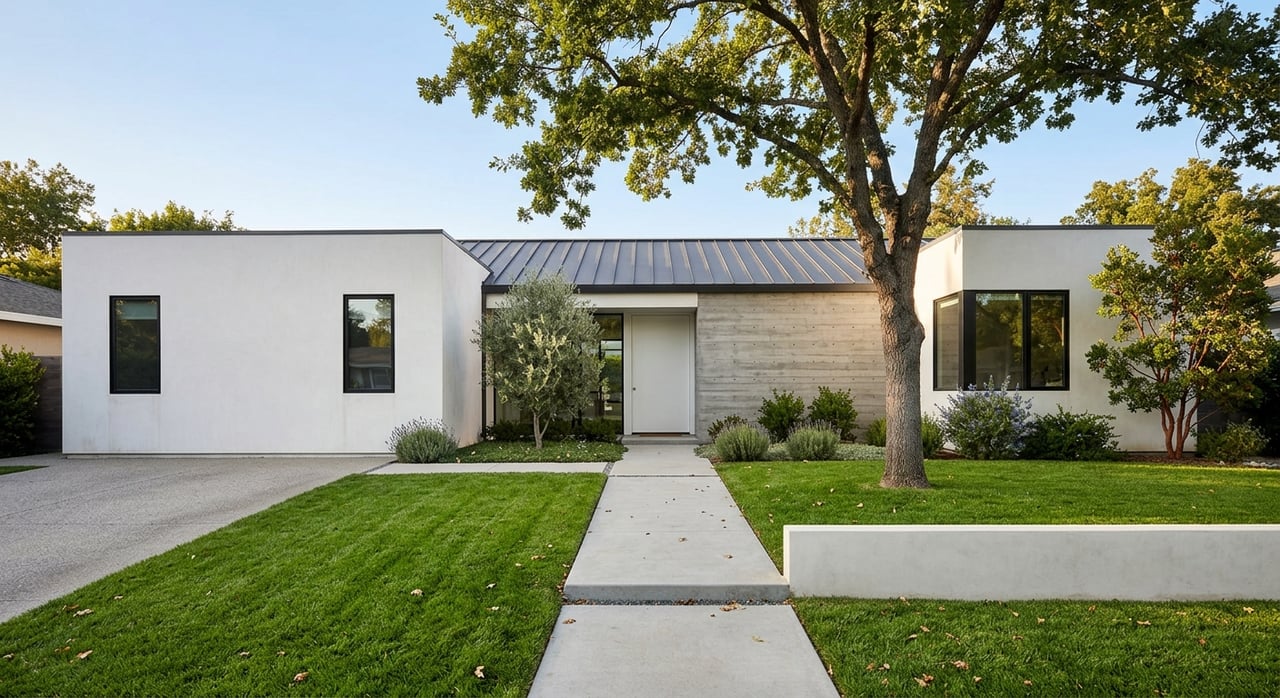
Lafayette gives upsizing buyers more variety in housing type. Recent market activity shows detached ranch and contemporary homes on lots ranging from about 0.25 acre to roughly 0.5 to 0.9 acre, along with a separate downtown condo market.
That matters if you are deciding between maximum square footage and a more walkable setup. You may find a traditional detached home with yard space, but you also have the option of in-town living if your priorities lean toward convenience and lower exterior upkeep.
Alamo tends to attract buyers who want a quieter, more residential setting. The area is more consistently oriented toward larger-lot detached homes, and the daily lifestyle is generally more car-based.
If your vision of upsizing includes more separation between homes, a larger yard, and a calmer residential feel, Alamo often checks those boxes. The tradeoff is that you usually give up some of the built-in convenience that Lafayette offers.
Recent Alamo listings show a strong concentration of single-story ranch and custom homes on roughly 0.3- to 0.5-acre lots, with a smaller amount of condo and townhome inventory near Danville Boulevard and Alamo Village. That creates a market that feels more consistently centered on detached housing.
For families who know they want a larger-lot home, this can be a major point in Alamo’s favor. You are generally shopping in a market where that product type is not the exception.
Alamo’s amenity network is more park- and trail-oriented than downtown-oriented. Contra Costa County lists Alamo parks and recreation resources, including Livorna Park, Andrew H. Young Park, Alamo School Sports Field, Rancho Romero School Sports Field, Hemme Station Park, access to the Iron Horse Corridor trail, and a year-round farmers market on Danville Boulevard.
That setup supports a quieter daily feel. Instead of a compact downtown core, Alamo reads more like a residential corridor with parks, school fields, and limited local retail.
Alamo does not have its own BART station. Instead, transit options include County Connection Route 21, which links Alamo Plaza with Walnut Creek BART, Danville, and San Ramon, plus the Alamo Creek Shuttle for certain connections.
That means Alamo is usually the better fit when most of your family’s movement is already going to happen by car. If train access is occasional rather than essential, the car-oriented setup may not feel like a drawback.
Both Lafayette and Alamo are high-demand markets where school assignment is part of the buying conversation. The key difference is less about declaring one objectively better and more about understanding how each system is organized.
Lafayette is served by the Lafayette School District for TK through 8, including Burton Valley, Lafayette, Happy Valley, and Springhill elementary schools plus Stanley Middle School. For high school, students move into the Acalanes Union High School District.
Alamo is part of the broader San Ramon Valley Unified School District, which serves Alamo, Danville, San Ramon, and portions of nearby communities. Official district and school pages show the Alamo-area path through Alamo Elementary, Stone Valley Middle School, and San Ramon Valley High School.
For your home search, this usually means Lafayette offers more elementary-school choice within a smaller city-based system, while Alamo is tied into a larger district structure. If school assignment is a deciding factor for your family, it is worth comparing addresses carefully before you narrow your search.
Neither market gives buyers much room for hesitation. Lafayette is very competitive, with homes selling in about 10 days on average and receiving roughly five offers per home, based on Redfin’s February 2026 data.
Alamo is also very competitive, with homes selling in about 8 days and about 77.8% of homes selling above list price, according to Redfin. In other words, if you are upsizing in either market, preparation matters.
You will likely need to move with clarity and confidence in both places. That includes knowing your non-negotiables, understanding your ideal lot size and commute tolerance, and being ready to act when the right home appears.
This is especially important because Lafayette and Alamo can overlap in price at the individual property level. A more polished or better-located home in Lafayette may compete directly with a larger-lot home in Alamo, so your decision often becomes deeply personal rather than purely financial.
The better choice depends on how you want daily life to feel after the move.
Choose Lafayette if you want:
Choose Alamo if you want:
If you are still torn, ask yourself these four questions:
The best move is the one that supports your real life, not just your wish list. For many upsizing families, that comes down to choosing between convenience and consistency of home style rather than asking which town is universally “better.”
If you are weighing Lafayette and Alamo and want a more tailored strategy around layout, lot size, commute, and resale potential, Ria Rossi can help you compare the options with a clear, local perspective and white-glove guidance.
Stay up to date on the latest real estate trends.


Connect with Ria Rossi for trusted, tailored guidance in the East Bay luxury market. Your next chapter begins here.