Lafayette vs. Orinda: Which East Bay Community Is Right for You?
Ria Rossi November 17, 2026
Ria Rossi November 17, 2026
Lafayette and Orinda are separated by one BART stop and only a few miles of Highway 24. To an outside buyer, they can appear almost interchangeable. Both are part of Lamorinda. Both offer beautiful hills, established neighborhoods, access to San Francisco and a highly sought-after residential lifestyle.
Live in them, however, and the differences become clear.
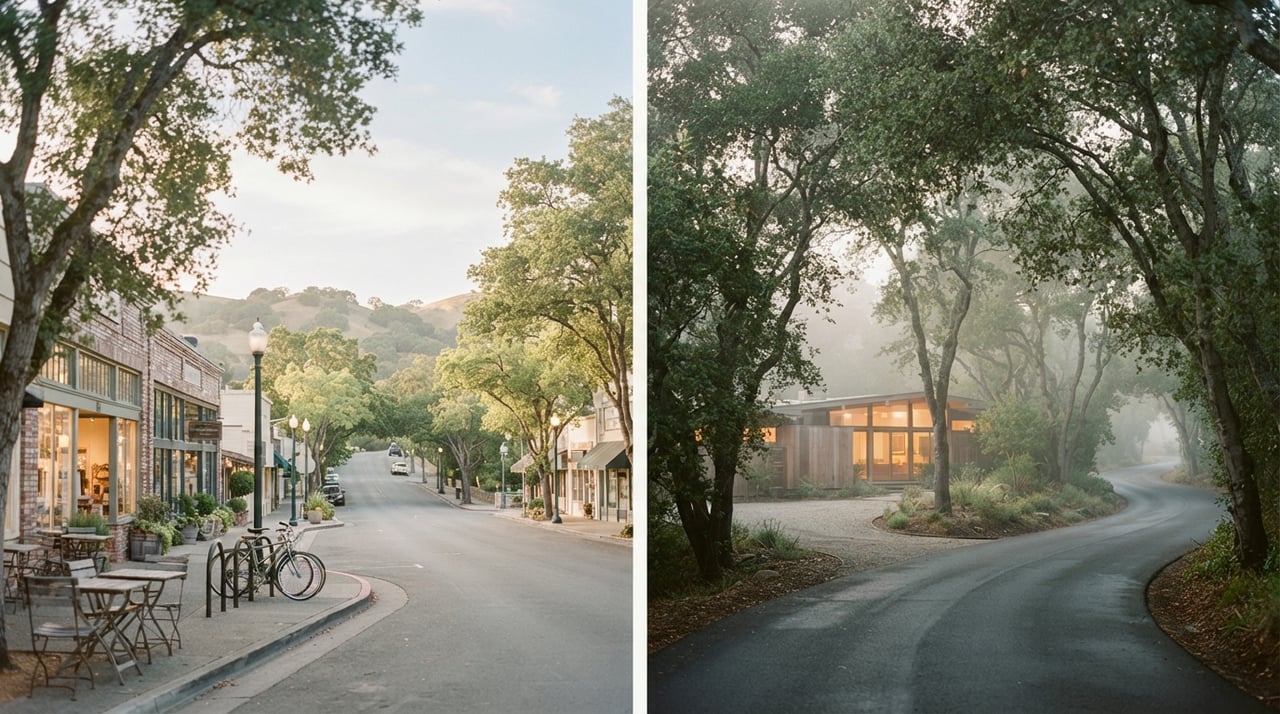
Lafayette feels more active and connected. Its downtown is longer and busier, its restaurant scene is broader, and many neighborhoods orient naturally toward town, BART and nearby Walnut Creek.
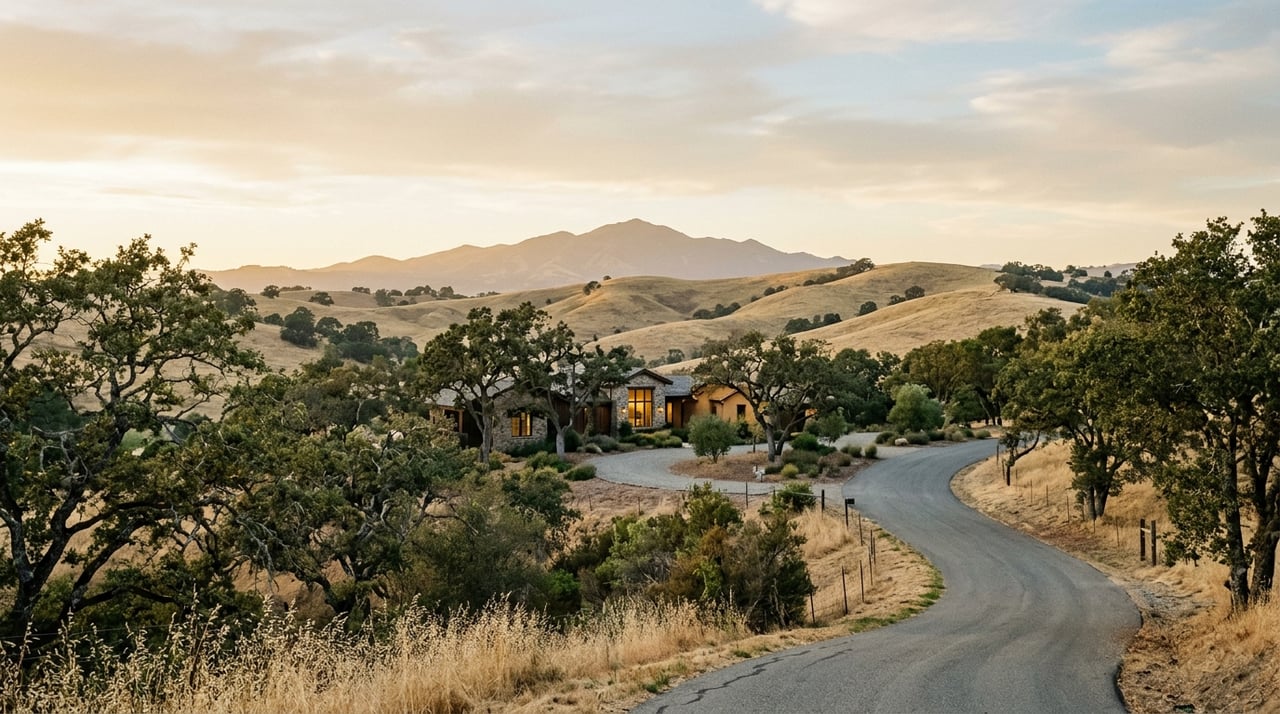
Orinda feels more hidden. Wooded roads curve into the hills, homes disappear behind mature landscaping, and daily life has the quality of a private retreat just beyond the Caldecott Tunnel.
Neither is universally better. The real question is: Do you want your community to feel more convenient and social, or more secluded and serene?
Having grown up in Orinda and now working throughout Lamorinda, I know this decision is rarely settled by a spreadsheet. It becomes clear when you understand how each place will shape an ordinary Tuesday.
Consideration | Lafayette | Orinda |
|---|---|---|
Overall feeling | Active, polished and connected | Wooded, private and retreat-like |
Downtown | Larger, with more restaurants, shops and services | Smaller, divided between the Village and Theatre Square |
San Francisco access | BART and Highway 24 | One BART stop closer to San Francisco and immediately east of the tunnel |
Housing | Ranch homes, remodeled properties, contemporary residences and major estates | Midcentury homes, custom hillside architecture, traditional properties and private estates |
Lots | Wide range, including more level parcels in select areas | Often sloped, wooded and integrated into the landscape |
Walkability | Stronger in neighborhoods near downtown and the trail corridor | Limited to select areas near downtown and BART |
Outdoor life | Lafayette Reservoir, Lafayette-Moraga Trail and extensive local trails | Orinda trails, San Pablo Reservoir access and a deeply wooded environment |
Best fit | Buyers prioritizing convenience, dining and a more visible community rhythm | Buyers prioritizing privacy, landscape and a sense of escape |
The neighborhood matters as much as the city. A secluded Happy Valley estate can feel more private than central Orinda, while an Orinda home near BART may be more convenient than a Lafayette property deep in the hills.
Lafayette’s luxury is connected. You can live on a beautiful residential street, reach BART, stop for coffee, meet a friend for dinner and be in Walnut Creek within minutes. The city protects its semi-rural character, but its downtown gives daily life a visible center.
Orinda’s luxury is separation. Once you turn off Highway 24, neighborhoods quickly become quiet, green and private. The landscape absorbs the homes. In many areas, you feel farther from the city than you actually are.
This shapes how often you walk into town, how long errands take and how much privacy you experience. For a San Francisco buyer, Lafayette can feel like a gentler transition to suburban life. Orinda can feel like a more decisive departure.
Lafayette offers an unusually broad range of luxury housing.
Near downtown are ranch homes, remodeled properties and newer construction, with easier access to schools, restaurants and BART.
Happy Valley presents another side of Lafayette, with private custom homes and significant estates. The finest may offer acreage, pools, guesthouses, level lawns and sports courts. Because Lafayette is hilly, usable land commands a premium.
Reliez Valley has a more pastoral atmosphere and access toward Pleasant Hill and Walnut Creek. Burton Valley offers a strong neighborhood identity and proximity to the Lafayette-Moraga Regional Trail.
Architecture ranges from midcentury ranch homes to contemporary residences, traditional homes and resort-style estates.
At the upper end, Lafayette luxury is defined by usable land, privacy and access. The most valuable properties solve all three.
Orinda’s housing is more inseparable from its landscape.
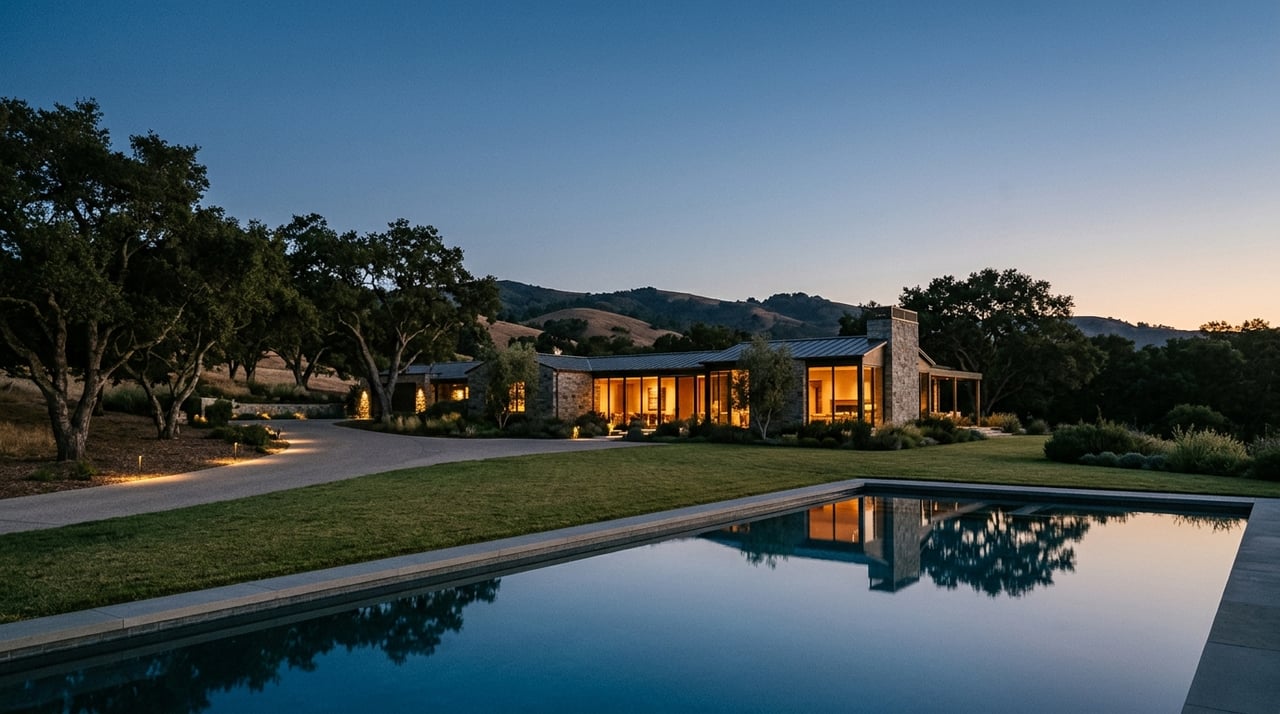
Wooded hills and valleys hold midcentury homes, custom contemporary architecture, traditional residences and older estates. Many sit below the road, above it or behind mature trees.
Sleepy Hollow, Glorietta, Del Rey, Orinda Downs and the areas around Orinda Country Club each have distinct identities. Wilder offers newer construction and a more planned environment.
Orinda can deliver privacy, views and architectural character, but sloped lots, narrow roads, drainage, retaining walls, driveways, trees and sun exposure all matter. A smaller parcel with a level lawn may function better than larger hillside acreage.
The best Orinda homes connect deeply to nature. Glass frames trees and ridgelines, while decks, pools and gardens follow the terrain. Its most individual properties would be difficult to reproduce today.
Lafayette has the larger downtown. Mt. Diablo Boulevard carries restaurants, coffee shops, boutiques, fitness studios, groceries, services and community events. It gives Lafayette a recognizable social center.
The city continues investing in pedestrian and bicycle access connecting neighborhoods, BART and downtown.
Orinda’s downtown is split by Highway 24 into the Village and Theatre Districts. Theatre Square, anchored by the historic theater, brings restaurants close to BART. The Village includes services, dining, the library and Community Park.
Its Art Deco theater, farmers’ market and community events add genuine charm. Many residents still visit Lafayette or Walnut Creek for broader dining and shopping.
Lafayette offers more spontaneous choice. Orinda offers a compact downtown that feels familiar and community-oriented.
Both cities have BART stations on the Antioch to San Francisco International Airport line, and both sit directly along Highway 24.
Orinda is one stop closer to San Francisco and immediately east of the Caldecott Tunnel. Yet a winding drive from the hills can add meaningful time before reaching BART or the freeway.
Lafayette is farther east but more straightforward from central neighborhoods. It is also closer to Walnut Creek and I-680.
Test the route from the exact property at your travel time. Include the drive to BART, parking, platform time and evening return.
For hybrid workers, Lafayette offers easier errands and dining. Orinda offers a stronger feeling of leaving work behind.
The Lafayette School District operates four elementary schools and one middle school. The Orinda Union School District also operates four elementary schools and one middle school. High-school students in both communities are served by the Acalanes Union High School District, with Lafayette generally associated with Acalanes High School and Orinda with Miramonte High School.
Exact assignment must be verified for the specific property. District boundaries do not always align perfectly with city names or postal addresses, and elementary assignments can be affected by internal boundaries and capacity. Lafayette School District expressly advises families to contact the district to confirm the home school for a parcel. Orinda Union School District provides its own school finder and attendance information.
For private-school families, both communities provide access to several East Bay options. Bentley’s Upper School is in Lafayette, while its K through 8 campus is in the Oakland Hills. Head-Royce is in Oakland, Saklan is in Moraga and Athenian is in Danville. School transportation can expand the practical map, but routes and availability should be verified annually.
Lafayette Reservoir offers paved and unpaved loops for walking and running. The Lafayette-Moraga Regional Trail serves cyclists, runners and families, with more routes extending into the hills.
Lafayette has approximately 16 miles of city-managed trails, plus regional and reservoir routes.
Orinda’s trails connect with regional open space, San Pablo Reservoir, Wagner Ranch and Wilder. The wooded setting makes nature feel present beyond formal trails.
Lafayette gives you defined places to run or walk. Orinda can make the neighborhood feel like the trail, though steep roads and limited sidewalks reduce casual walkability.
Lafayette wins on breadth. It has more restaurants, grocery choices, services and fitness options within the city, plus immediate access to Walnut Creek. Buyers who want a small-town environment without sacrificing convenience often gravitate here.
Orinda covers daily essentials and has a growing collection of restaurants, particularly around Theatre Square and the Village. The historic theater gives downtown a cultural identity Lafayette does not quite replicate. Still, residents commonly travel to Lafayette, Walnut Creek, Berkeley or Oakland for greater variety.
For some buyers, this is a meaningful inconvenience. For others, it is part of Orinda’s appeal. Fewer destinations and less pass-through activity help preserve the quieter atmosphere.
Lafayette and Orinda are both relatively small housing markets, so monthly medians can swing based on the mix of homes sold.
In September 2026, one local market report placed the detached-home median at approximately $1.91 million in Lafayette and $1.84 million in Orinda. Lafayette homes in that snapshot sold in a median of 11 days, compared with 18 days in Orinda. A broader third-quarter report placed Orinda’s detached median around $1.79 million.
These figures are useful context, not a direct measure of what a particular home is worth. A renovated property on a level lot near town belongs to a different competitive set from an original-condition hillside home, even when both share the same ZIP code.
At the luxury level, buyers pay premiums for complete properties. In Lafayette, that may mean usable land, a pool, guest space and easy town access. In Orinda, it may mean architectural significance, wooded privacy, views and outdoor areas that function beautifully with the terrain.
Neither set of tradeoffs is inherently negative. The mistake is discovering them after falling in love with the house.
Choose Lafayette if you want:
Choose Orinda if you want:
If you are still undecided, spend one full day in each. Drive the neighborhoods at school-drop-off time. Visit BART. Walk downtown. Test the route to work. Tour homes at the same price in both cities. The difference usually becomes intuitive very quickly.
Orinda is geographically closer and one BART stop nearer to San Francisco. Actual travel time depends on the property’s distance from Highway 24 or BART and current traffic.
Generally, yes, particularly near downtown and the Lafayette-Moraga Regional Trail. Most neighborhoods in both cities remain car-oriented, and walkability varies greatly by address.
Both offer large properties. Lafayette has more opportunities for estate-style parcels with substantial usable outdoor areas in select neighborhoods. Orinda often offers wooded hillside acreage, where total lot size may not equal level usable land.
Lafayette has a larger downtown with more restaurants, shops and services. Orinda’s smaller downtown has distinctive charm, centered on the Village, Community Park and historic Orinda Theatre.
Orinda has the geographic edge, but a Lafayette home close to BART may outperform an Orinda home deep in the hills. Compare exact addresses rather than city averages.
Their elementary and middle schools are operated by separate local districts. Both communities are served at the high-school level by the Acalanes Union High School District. Verify all assignments directly with the districts.
Market medians are often close and can change with the mix of sales. Lafayette may command premiums for central convenience and usable estate land. Orinda may command premiums for exceptional architecture, privacy, views and irreplaceable settings.
Lafayette and Orinda offer two refined versions of the Lamorinda lifestyle.
Lafayette is the choice for many buyers who want beauty, space and community without giving up everyday convenience. Orinda is the choice for buyers who want their home to feel hidden in the landscape, even while San Francisco remains surprisingly close.
The right decision cannot be made by comparing two median prices or scrolling listings independently. It requires understanding the roads, topography, school routes, sun, noise, access and neighborhood rhythm of each property.
Having grown up in Orinda and built a real estate practice across Lamorinda and the greater East Bay, Ria Rossi of Compass helps buyers see what listing photos cannot show. If you are comparing Lafayette and Orinda, the goal is not merely to find the better house. It is to choose the community whose daily rhythm feels most like your own.
Stay up to date on the latest real estate trends.

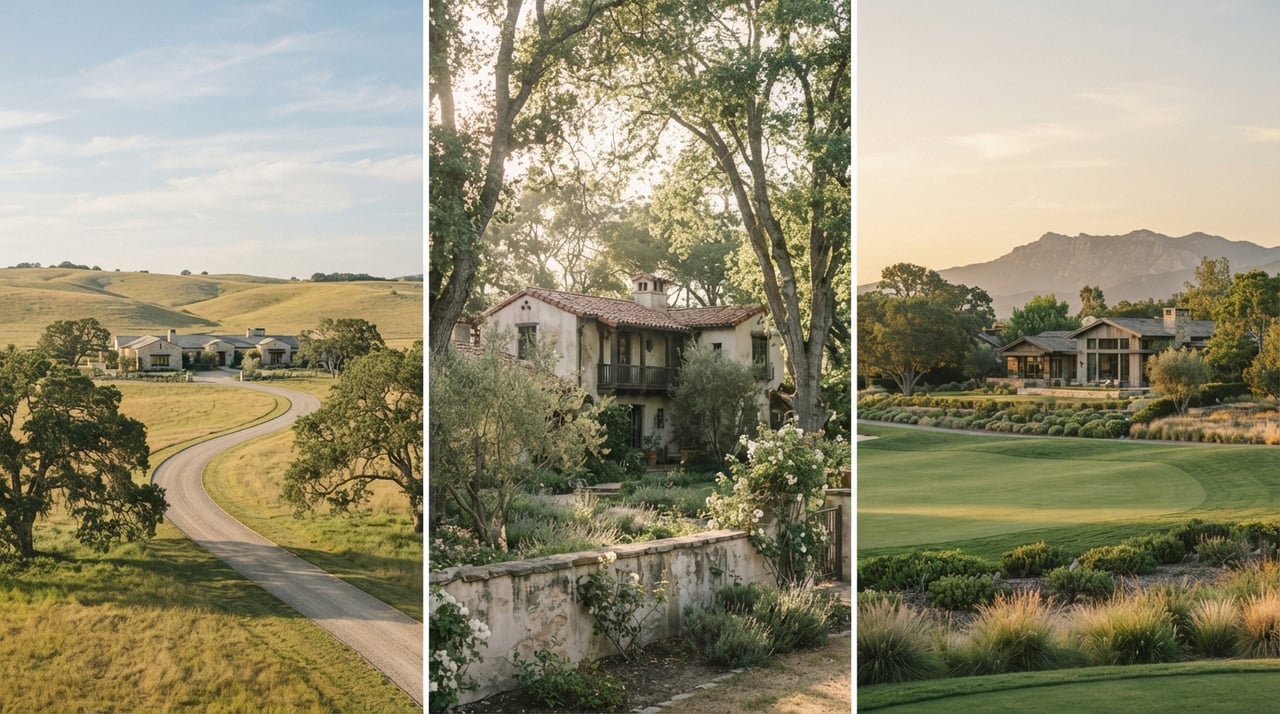
Alamo is luxury with freedom. Diablo is luxury with history. Blackhawk is luxury with structure.
One BART stop apart, two very different ways to live. A local’s guide to choosing between them.
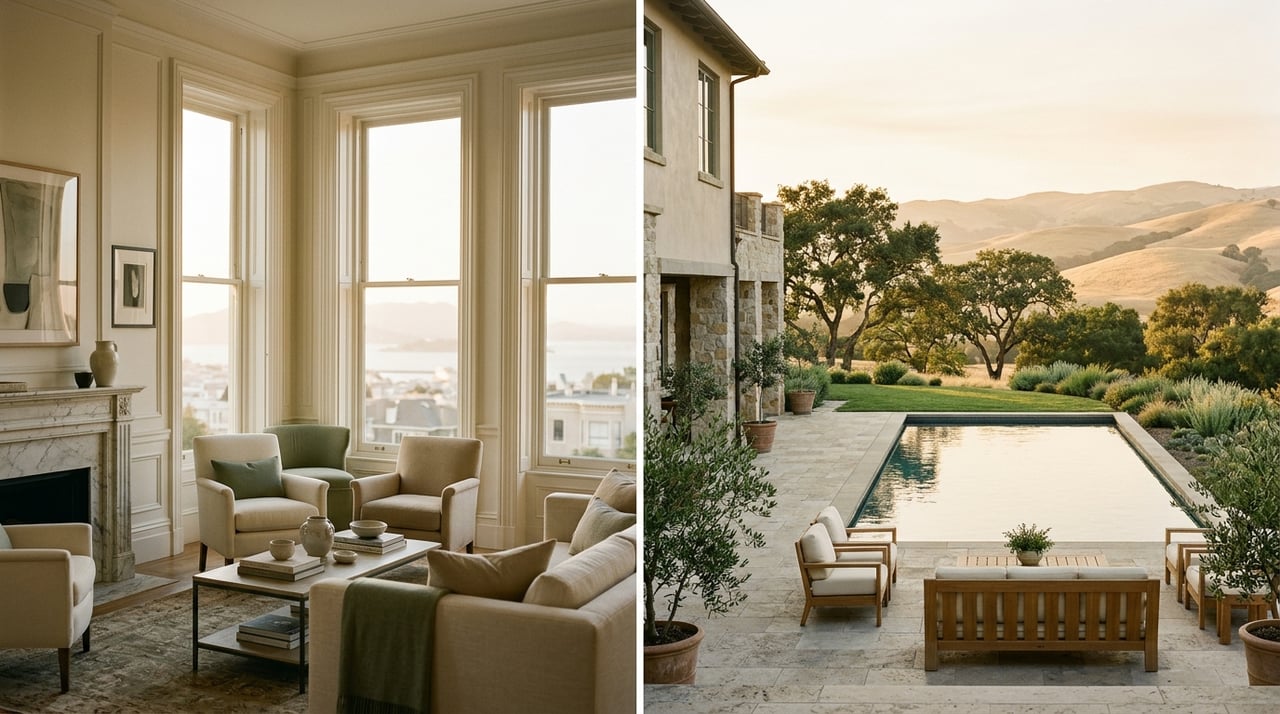
In the city, you buy the address. Across the Bay, you buy the land around it.
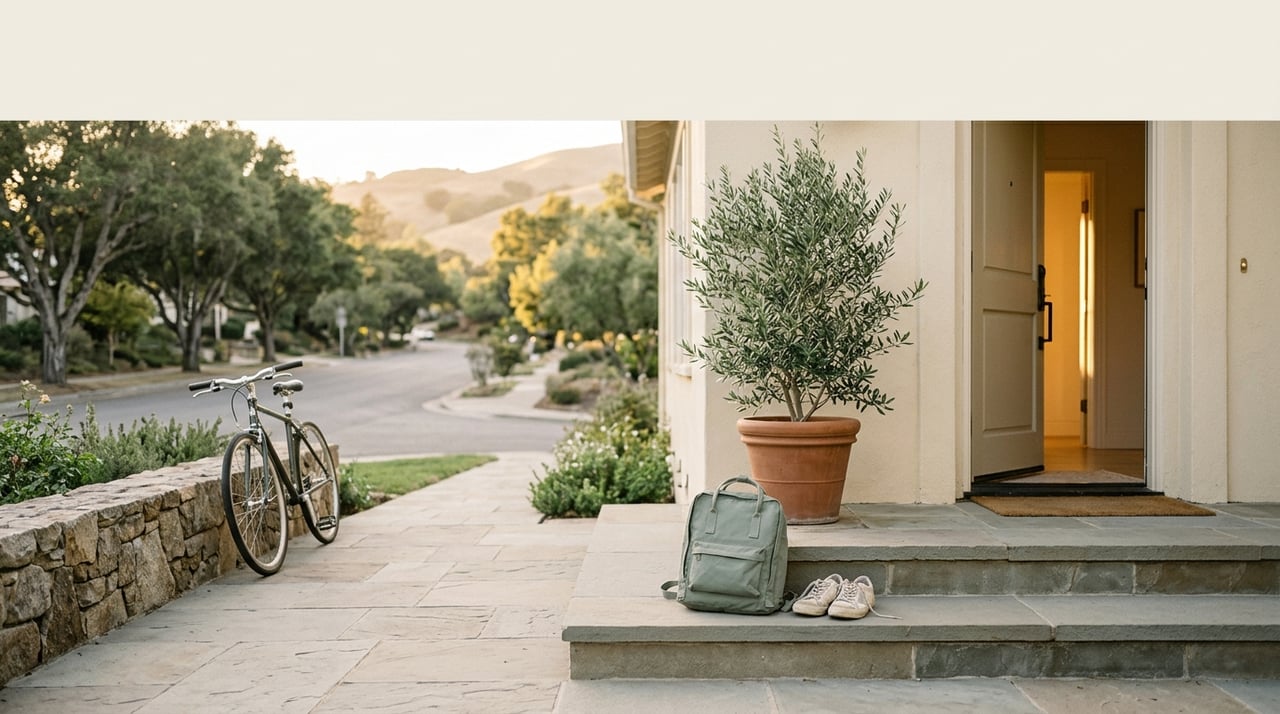
The morning drop-off is the easy part. Choose the home that makes the afternoon work.
At $5 million, you buy a home. At $10 million, an estate. At $15 million, something the market may not offer again.
You’ll give up some spontaneity. What you gain is margin.
Five communities, minutes apart. The right one is the one that fits your ordinary day.
Connect with Ria Rossi for trusted, tailored guidance in the East Bay luxury market. Your next chapter begins here.