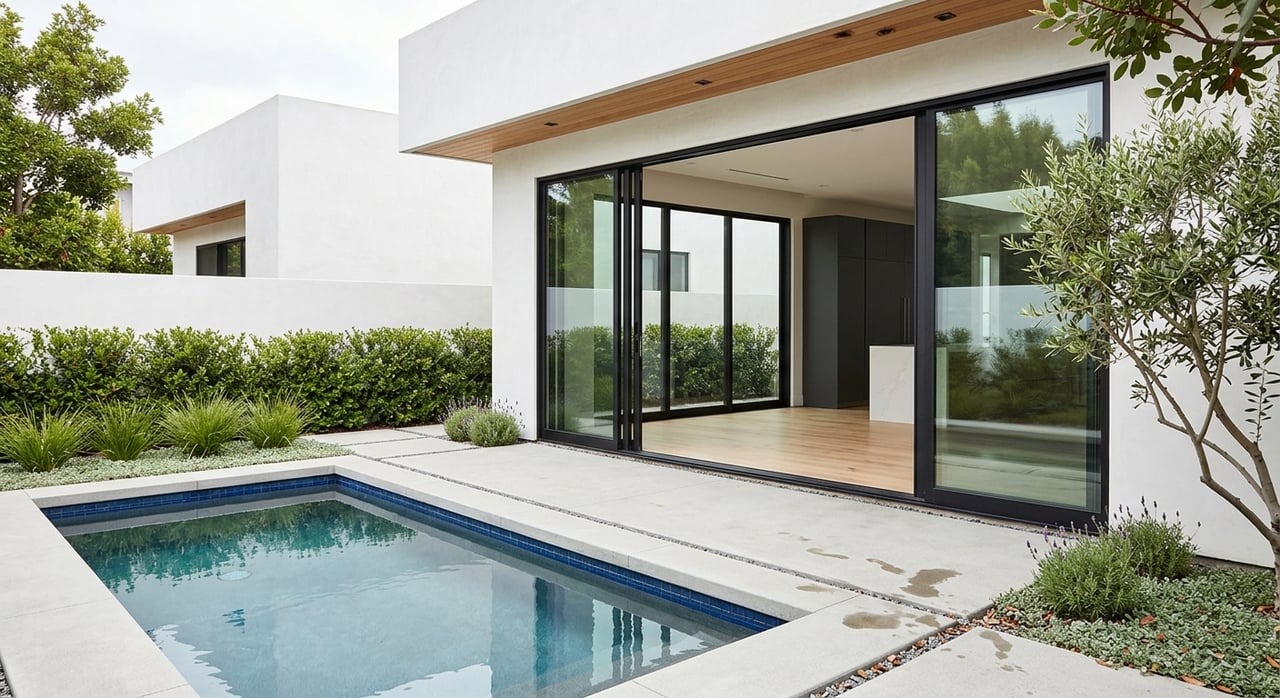
Inside Alamo’s Estate And Country Club Neighborhoods
May 28, 2026
May 28, 2026
Looking for the part of Alamo that feels the most private, established, and distinctly residential? If you are drawn to large lots, mature trees, custom homes, and a quieter day-to-day setting, Alamo’s estate and country club neighborhoods tend to stand out right away. Understanding how these areas differ can help you narrow your search, compare lifestyle tradeoffs, and decide which pocket fits the way you want to live. Let’s dive in.
Alamo has a different rhythm than many nearby East Bay communities. It is an unincorporated Contra Costa County community, so planning and neighborhood issues run through the county and the Alamo Municipal Advisory Council rather than a city government.
That structure helps explain why Alamo often feels less like a town with a major downtown core and more like a collection of residential pockets connected by key corridors. The county identifies the main commercial node around Danville Boulevard and Stone Valley Road, where you will find shopping, office, civic uses, and housing.
The county’s 2045 General Plan describes Alamo and Castle Hill as communities rooted in ranch and orchard history. Over time, the area remained relatively rural until after World War II and evolved into a place known for single-family ranch-style homes on larger lots, along with estates on large rural tracts.
If you compare Alamo with Danville, Lafayette, or Walnut Creek, the numbers tell part of the story. Census QuickFacts show Alamo had 15,314 residents in 2020 and a population density of 1,560.1 people per square mile.
That is lower than Danville at 2,410.8 people per square mile, Lafayette at 1,690.0, and Walnut Creek at 3,548.9. Alamo also has a 91.8% owner-occupied housing rate, which is higher than the nearby communities listed in the research.
In practical terms, that often translates to a more secluded, predominantly single-family setting. You are not choosing Alamo for an urban, transit-oriented environment. You are choosing it for space, privacy, and a residential texture shaped by trees, lot size, and a quieter street presence.
When people think about Alamo’s country club lifestyle, Round Hill is usually the clearest example. The Round Hill Property Owners Association says the community was created in 1959 and includes 396 residences beside a championship 18-hole golf course.
An important detail is that the neighborhood and the club are separate entities. Even so, the location next to Round Hill Country Club gives this pocket a strong identity that is closely tied to golf and club-centered recreation.
The club opened its course in 1960 and added its clubhouse, tennis facility, and pool in 1961. Today, it highlights golf, 14 tennis courts, 4 pickleball courts, a pool complex, bocce, dining, and fitness.
County police service boundaries also group Round Hill, Round Hill North, Windsor Green, and Regency Woods as a distinct service area. That reinforces how central this cluster is to Alamo’s country club image.
Round Hill appeals to buyers who want an established residential setting with a recognizable neighborhood name and close proximity to private recreation. The draw is less about density or a walkable downtown feel and more about a polished, residential environment with long-standing appeal.
If that lifestyle matters to you, pay attention to how homes relate to the club-adjacent setting, surrounding streets, and lot orientation. In neighborhoods like this, the experience often comes from the full setting, not just the square footage of the home itself.
Alamo’s estate character is broader than one neighborhood. County materials identify Whitegate, Bryan Ranch, Stone Gate, and the Hillgrade area as distinct pockets within Alamo, and the general plan supports the idea that large-lot homes and estate properties are part of the community’s wider identity.
This is one reason Alamo can feel so nuanced from one area to the next. Instead of a single master-planned look, you often see a mix of large parcels, winding roads, mature landscaping, and homes with more individualized design.
The county’s historic inventory adds to that impression. White Gate Farm was built in 1856 with New England design influences, while Rosebrook Estate was designed in 1941 by Carr Jones in Storybook Style.
Taken together, these details suggest that Alamo’s estate appeal often comes from privacy, parcel size, and architectural variety rather than a uniform subdivision pattern. For buyers who value character, that can be a major advantage.
Whitegate, Bryan Ranch, Stone Gate, and nearby estate-oriented pockets are often best understood through their overall feel. These are the kinds of areas where custom homes, deeper setbacks, and established landscaping shape the streetscape.
If you are searching for a home that feels more curated and less standardized, these neighborhoods deserve a close look. They may appeal especially to buyers who value design, indoor-outdoor living, and the sense of separation that larger lots can provide.
Even with its low-density setting, Alamo offers a strong recreation network. The Iron Horse Regional Trail runs through the area and connects to downtown Alamo and Alamo Square, with access points at Danville Boulevard, Lisa Lane, and Stone Valley Road.
The Las Trampas to Mt. Diablo trail also uses Alamo access points, including Oak Hill Park at Stone Valley Road and Glenwood Court. For many residents, this combination of trail access and open-space proximity is part of what makes Alamo feel special.
County parks support that same lifestyle pattern. Hap Magee Ranch Park sits on a historic ranch site near regional trails, Livorna Park includes bocce courts, a gazebo, and seasonal concerts and movie nights, Hemme Station Park provides Iron Horse access, and Andrew H. Young Park is near the Alamo Plaza Shopping Center.
This matters because Alamo’s convenience is not built around a large downtown. It is more corridor-based, centered on Danville Boulevard, Stone Valley Road, and neighborhood-serving commercial areas.
If you are deciding between Alamo neighborhoods, it helps to focus on the kind of daily environment you want most. The differences are often subtle, but they affect how a home feels over time.
Here are a few smart ways to compare estate and country club areas in Alamo:
For many buyers, the decision comes down to whether they want club adjacency, a custom-home setting, or the quiet feel of a larger-lot residential pocket. Each version of Alamo offers something a little different.
If you are buying in Alamo, neighborhood nuance matters because the market is shaped by micro-location and presentation. Two homes with similar size can offer very different experiences depending on lot configuration, privacy, architectural style, and proximity to recreation or main corridors.
If you are selling, that same nuance creates opportunity. In a place like Alamo, buyers often respond strongly to how a home’s setting is framed, from mature landscaping and indoor-outdoor flow to architectural details and the overall feeling of retreat.
That is where thoughtful positioning matters. In estate and country club markets, the story of the home is often inseparable from the story of the neighborhood.
If you want help understanding which Alamo pocket best matches your goals, or how to position a home for today’s buyer, Ria Rossi offers a polished, white-glove approach grounded in local insight, thoughtful presentation, and strategic guidance.
Stay up to date on the latest real estate trends.
Connect with Ria Rossi for trusted, tailored guidance in the East Bay luxury market. Your next chapter begins here.